Be patient. Good things come to those who wait. ~ Fortune cookie.
Really? How long do I have to wait?
I wonder about this saying. Is it really enough to wait for something good to happen? Surely something good will happen eventually.
I have to disagree. If I want something good to happen I need to take action to make sure it happens. If I want to finish my novel, it’s not enough just to wait. If I want a job one day, I’m not going to sit around and wait for one to drop into my lap. So where does this fortune cookie get off telling me to wait?
I suppose there are some things we simply have to wait for, however. Love, for instance. It seems the more I’ve looked for it in my life, the more elusive it is. Giving up looking for it, in my experience, has been the only way it’s found me.
Give it up, get it all. Have you heard that one? Maybe I made it up, because I can’t seem to find it anywhere on Google. It makes a lot of sense to me though. When I give up striving for one thing, other things present themselves as opportunities to get what I wanted in the first place. Tunnel vision doesn’t do anyone any good.
I still doubt patience has anything to do with it. Thoughts? Have you ever given up on something and then got it anyway?
When my son Christopher came home with it from school, I asked him if it was Mr. Potato Head. He looked at me as if I was crazy and said, “It’s a clown!”
I’ve had this … head sitting on my kitchen counter for about three months now. It goes from making me sad, to creeping me out and back again, sometimes within the space of minutes. This disembodied head is my companion when I cook, when I wash dishes, and whenever I go looking for a snack. Unfortunately it’s never distracted me enough from a midnight snack however, to prevent me from getting one.
So where am I going with this post?
It makes me think about the lives our kids lead when they’re not at home. They have this whole other world when they go to school where they probably never think of us, except in terms perhaps of whether or not we’re going to make their favourite dinner that night, or did we go pick up the thing they wanted at the store. The way they slowly separate themselves from us as the years go on is both scary and comforting. To know that they may just have enough interests that have nothing to do with us, enough to one day have lives of their own secures in my mind at least that they’ll be okay when we’re gone.
Even if their lives away from us consist of creepy disembodied heads. As long as they’re ceramic, I’m happy.
Spring has sprung,
the grass is ris’,
I wonder where Stream of Consciousness Saturday is?
Oh look, it’s almost here! Today is Friday however, and time for your SoCS prompt.
This week your prompt will be “object.” Choose an object, or write about something you object to. Nouns and verbs don’t matter here at Stream of Consciousness Saturday. If you do go with the noun, try to include a picture.
After you’ve written your Saturday post tomorrow, please link it here at the prompt page in the comments so others can find it and see your awesome Stream of Consciousness post. Don’t be afraid to join in – it’s fun! Heck, bring a friend!
Here are the rules:
1. Your post must be stream of consciousness writing, meaning no editing, (typos can be fixed) and minimal planning on what you’re going to write.
2. Your post can be as long or as short as you want it to be. One sentence – one thousand words. Fact, fiction, poetry – it doesn’t matter. Just let the words carry you along until you’re ready to stop.
3. There will be a prompt every week. I will post the prompt here on my blog on Friday, along with a reminder for you to join in. The prompt will be one random thing, but it will not be a subject. For instance, I will not say “Write about dogs”; the prompt will be more like, “Make your first sentence a question,” or “Begin with the word ‘The’.”
4. Ping back! It’s important, so that I and other people will come and read your post! The way to ping back, is to just copy and paste the URL of my post somewhere on your post. Then your URL will show up in my comments, for everyone to see. For example, in your post you can copy and paste the following: This post is part of SoCS: https://lindaghill.wordpress.com/2014/05/30/the-friday-reminder-and-prompt-for-socs-may-3114/ The most recent pingbacks will be found at the top.
5. Read at least one other person’s blog who has linked back their post. Even better, read everyone’s! If you’re the first person to link back, you can check back later, or go to the previous week, by following my category, “Stream of Consciousness Saturday,” which you’ll find right below the “Like” button on my post.
6. Copy and paste the rules (if you’d like to) in your post. The more people who join in, the more new bloggers you’ll meet and the bigger your community will get!
At the ripe old age of 50, I’m seriously considering starting a career. At the moment I have no income whatsoever, apart from the $15 I bring in every week (I know, put your jaw back in place) from my paper route. The government supports my kids because of their disabilities and we all live off that. If I’m ever unable to physically care for them anymore, or if they by some miracle are able to look after themselves, I’ll have nothing. Even now, I’m living beyond my means.
So I’ve been looking into University level courses to get an Editing Certificate. I’ve enjoyed the proofreading/beta reading I’ve done so far, and it’s something I could do from home, on a freelance basis. There are no Universities in the area that offer the course, however, so I’d have to do it online. Even if there was a course available close by, I’d have a hard time getting there with the limited time I have free due to looking after the kids. Add to that the fact that I can’t always be reliable given a certain day and time, and the concept of going to University is pretty much a flushable one.
Originally I was looking into the idea of taking a copy editing course, or even some more creative writing courses. I recognize though that it’s not recommended that one does one’s own final edit. And so no matter how good I am at writing, or how much I think my writing is perfect, I know it won’t be. If, on the other hand, I learn to edit other people’s work and get some money coming in from that, I’ll be able to afford to pay an editor to edit mine. It’s kind of like the old adage, “Give a man a fish and he’ll eat for one night, but teach a man to fish and he’ll eat his entire life” … except this fisherwoman will still be asking other people to fish for her. And THEN, maybe I’ll be able to do something about the little red line that goes under “fisherwoman” but not “fisherman.” First the Certificate, next, the world! Or at least the world of spell check.
Anyway, that’s what’s been going through my little brain of late. I’ve always wanted to go to University. About time I did, if I’m going to. Never too late to start, right? I don’t want to be sitting around in two years thinking to myself, “If only I’d started two years ago, I’d be finished now,” after all.
Is there anything you’ve wanted to start and thought it was too late? Has this made you want to get off your butt and do it?
It’s time again for your Stream of Consciousness Saturday prompt! It’s been a week of having and lacking for me. It’s a condition that follows us all throughout our lives: the haves and have nots. If we’re lucky, neither stays with us for long. No one wants to be wanting, and yet if we had everything we wanted all the time, we wouldn’t know how to appreciate it.
This week your Prompt will be “with/without.” Choose one to write about or include both. Write about any subject you wish, as always.
After you’ve written your Saturday post tomorrow, please link it here at the prompt page in the comments so others can find it and see your awesome Stream of Consciousness post. Let’s have lots of participants again this week. Try it, it’s fun!
Here are the rules:
1. Your post must be stream of consciousness writing, meaning no editing, (typos can be fixed) and minimal planning on what you’re going to write.
2. Your post can be as long or as short as you want it to be. One sentence – one thousand words. Fact, fiction, poetry – it doesn’t matter. Just let the words carry you along until you’re ready to stop.
3. There will be a prompt every week. I will post the prompt here on my blog on Friday, along with a reminder for you to join in. The prompt will be one random thing, but it will not be a subject. For instance, I will not say “Write about dogs”; the prompt will be more like, “Make your first sentence a question,” or “Begin with the word ‘The’.”
4. Ping back! It’s important, so that I and other people will come and read your post! The way to ping back, is to just copy and paste the URL of my post somewhere on your post. Then your URL will show up in my comments, for everyone to see. For example, in your post you can copy and paste the following: This post is part of SoCS: https://lindaghill.wordpress.com/2014/05/23/the-friday-reminder-and-prompt-for-socs-may-2414/ The most recent pingbacks will be found at the top.
5. Read at least one other person’s blog who has linked back their post. Even better, read everyone’s! If you’re the first person to link back, you can check back later, or go to the previous week, by following my category, “Stream of Consciousness Saturday,” which you’ll find right below the “Like” button on my post.
6. Copy and paste the rules (if you’d like to) in your post. The more people who join in, the more new bloggers you’ll meet and the bigger your community will get!
I (finally) had a weekend off and I managed to get loads of editing done. In doing so, even after reading it for what must be the twentieth time, I’ve discovered I like my story! so at least if no one else ever reads it, I can enjoy it over and over again. But having said that, I’m going to do my damnedest to get it published–fates willing–this year.
I began seriously thinking about the sequel to The Great Dagmaru and I got as far as writing a page of it. I’m extremely tempted to switch to the first person, past tense for the second book. The first is written in third person omniscient. I’m afraid of limiting myself too much by changing. If I remember correctly, it’s what Anne Rice did with “The Vampire Lestat” after having written “Interview With A Vampire,” so the concept isn’t without precedent.
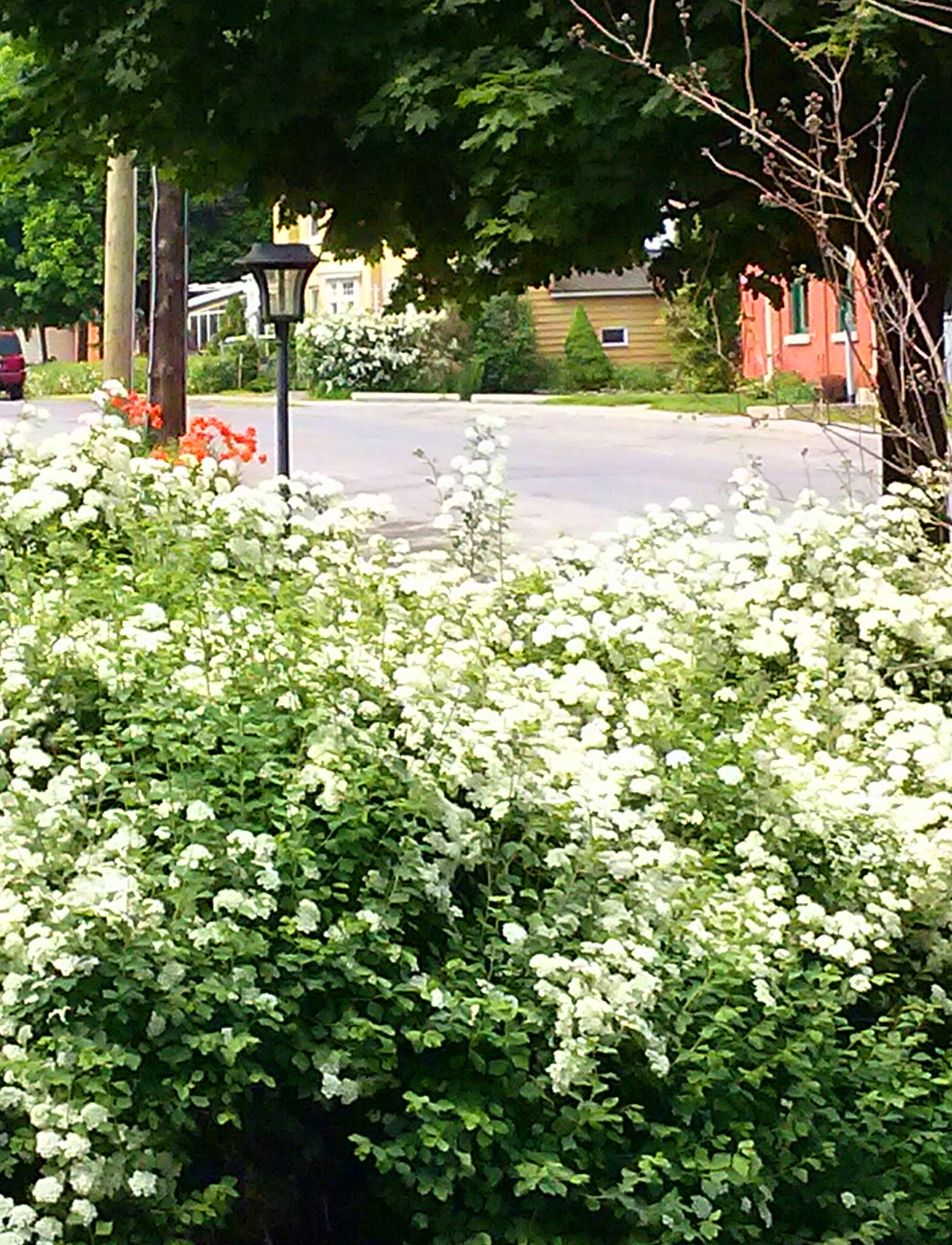
Apart from that I didn’t do much worth writing about over the weekend. I did take this picture though:
Somehow the white in this photo is much more palatable than the white of snow, don’t you think?