Life in progress


38 Comments

Horny – #AtoZChallenge

The difference between erotica and pornography is not love. It is word choice.

Yes, my thesaurus stuck me with the word “horny” for the letter H. I cheated on the letter G – I couldn’t cheat twice in a row.

Yet I’ve found something to talk about on the subject, and it’s something I’ve been thinking about writing on for a week or so anyway. I’ve come across the question a few times in the last few months: “What is the difference between erotica and porn?” The answers given on the various platforms have ranged from porn is dirty and erotica isn’t, to erotica is when you have a real relationship and porn is just for one night stands. Neither of these is correct, nor is it true that erotica only includes clean words, though word choice has a lot to do with it.

The short scene I’ve included below is one I wrote about three years ago. It is erotica, it is a bit messy, there are no swear words, and there is no sex. I think I may have linked to it a couple of years ago (it was on another site), so you might be familiar with it if you’ve been following me for a long time.

Enjoy.

“If you want to be a healthy young woman, you need to eat more fruit,” he said as he placed on the kitchen table before me a peach and a bowl of blueberries.

When our relationship was new, he explained that he wanted to wait until at least the third month before we slept together. He enjoyed the anticipation, he told me on our first date. The concept was new to me, but so far I had to agree. Now, as the second month was becoming the third, we both felt the tension of our abstinence.

He told me also that he wished to take care of me. Feeding me seemed a little extreme, but I decided to go along with it for the time being. To see where he was going with it. He hadn’t lead me astray yet, after all.

He turned his chair around and straddled it, sitting at the end of the table, to my right.

“Are you hungry?” He raised an eyebrow and I took in his smile, the roughness of his five o’clock shadow, his lean body all the way down to his belt, below which I could only imagine.

“Famished.” I clasped my hands together in my lap, not wanting to look down but hoping my shirt was unbuttoned enough at the collar to tempt him with a little cleavage.

He picked up a single small blueberry from the bowl and held it to my lips. I opened my mouth but he didn’t let go of the fruit. Instead he twirled it between his thumb and forefinger.

“I want to put it on your tongue,” he said. “Don’t bite it.”

I allowed him to place it in my mouth.

“Press it against your palate with your tongue … move it around … resist the temptation to eat it.”

I moved the little nub of fruit around inside my mouth as I was instructed. It was firm and round and I couldn’t … I shifted it with my tongue to my molars and gently closed them until the blueberry exploded in a tiny burst of bitterness.

I blushed. “Sorry,” I said.

“We’ll try again,” he said, patiently. The one he brought to my lips next was larger. Softer. I knew it would be sweeter and more difficult to resist. The skin of it was wrinkled and on my tongue it felt malleable. This time when I pressed it against the roof of my mouth it gushed, yielding easily to the pressure.

“You really are hungry, aren’t you?” He smiled at me and shifted in his chair to ease his discomfort. “Let’s try the peach then, shall we?”

He held it out to me and I took it. It smelled as ripe and luscious as it looked.

“Bite it,” he commanded, his eyes half-lidded. “Open wide and …”

My teeth penetrated the delicate skin of the fruit, and the juice cascaded past my lips in a great wash of fluid. I tilted my head back to guzzle as much of it as I could, but some of it dribbled down my chin as the flesh of the peach made contact with my tongue. I took as much down my throat as I could handle; the excess dripped from the edge of my lower lip. I felt it drop and then trickle down between my breasts and I moaned.

Licking his own lips in sympathy, or perhaps it was lust, he stared at me, hard.

“Do you want some?” I asked him.

“Yes,” he whispered hoarsely.

***

If you’d like to read some more of my fiction, please check out my A to Z Challenge-inspired novelette “All Good Stories.” It’s a romantic comedy about two best friends who belong together – Xavier knows it, but Jupiter has her eye on another guy: a shady character named Bob. There’s even a touch of erotica in it.

“A short funny tale of two friends” ~ Ritu, 4 stars, Amazon UK review

“Quirky and charming.” ~ Bobby Underwood, #11 top reviewers on Goodreads – 5 stars
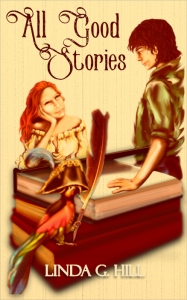
Click the picture to find it on Kindle, or get it on Kobo here: https://www.kobo.com/ca/en/ebook/all-good-stories


34 Comments

Totally Random and Somewhat Amusing

If it’s not one thing… I’m sure at some point or another I’ve started a post like this before. In fact if I have, it’ll probably show up in the “see also” previews below this post. And the truth is, I hate being negative. So I’ll just get this over and done with. It’s really not that bad. In fact it probably hasn’t even been worth all this intro to it.

You know I had a bug bite the other day that made my hand swell? Well, that’s better. Now I have a sore on the very tip of my “d” finger. Why do I refer to my finger as my “d” finger? It only hurts when I type. No idea what the problem is. Can’t see anything except a painful blister. Yeah, wasn’t worth the intro.

In other news:

I used a sprint (set a timer for 10 minutes and just typed until the buzzer went off) to kick-start my novel writing. I got less than 400 words written in that 10 minutes, but it got me back into my story. I managed to write another 1,600 words today. The moral of the story is, sprints work when you’re stuck. It’s kind of like stream of consciousness that no one will ever read.

Every time I see “Cookie Policy” on a website I think about my own cookie policy – don’t buy them if I don’t want to gain weight. And definitely not if I go to the store hungry.

How is it that people think by writing f*ck instead of fuck no one will be offended? Is an asterisk any less offensive than a “u” just because it looks like a pretty flower? Okay, maybe it is.

Getting back to not wanting to write about miserable things, I’m actually a funny person most of the time. You can tell by my humorous fiction over at my fiction blog. Oh, and the novelette I’ll be (hopefully) publishing next week! It’s a light, romantic comedy that you’ll be able to read over a lunchtime or two. On sale soon for just $0.99 at Amazon and Kobo. Watch out for my celebratory post when the details are finalized!

It’s hard to be funny when you’re under pressure to be though, isn’t it? Waaay back when my SoCS prompt was fairly new, I made the prompt for the week “funny.” We all found it difficult to write about anything that was laugh-out-loud funny, so most of us wrote about something peculiar instead.

Knock, knock! Hang on, that one doesn’t work very well in a post. Why did the chicken cross the road?


46 Comments

Method Writing

Writing characters who are vastly different to ourselves is something many of us do, or at least strive to do. It’s not easy to extract one’s personality completely from the page – we can only write what we know, after all. Yes, imagination is a far-reaching avenue, but how do we make it stretch as far as it can possibly go?

I have a theory that is probably not all that unique, but I’d like to share it anyway.

When I was in high school drama class, I learned about something called the Stanislavski Method, or, Method Acting. For a full description of what it is and how it came about click here: http://en.wikipedia.org/wiki/Stanislavski%27s_system In my own words I can tell you it’s a method of acting where the actor studies the motivations of the character and makes use of empathetic observations in order to “become” the character. Its a way of bringing about realism and believability.

This is the method I have striven to bring to my writing. To “become” the character I’m writing makes my dialogue and my character’s actions come to life. To do so I need to be able to concentrate and to empathize with what they are experiencing. I often try on their expressions and imagine, as though I’m watching them on a screen, moving in the ways that their emotions dictate. There are times, therefore, when I must go through a scene twice or more times in order to get the nuances just right from each perspective, but by doing so my scenes are much more lifelike and full of what makes my readers able to envision them.

I believe empathy is something that is essential to a writer. It’s why we people-watch; to gain insight on how people emote, their body language and what causes it. Without empathy, we can only write characters who are cardboard cut-outs of stereotypes.

I realise this is hardly a groundbreaking idea, but the Stanislavski Method of Acting is certainly one to pay attention to for a writer. The more we know our characters and what makes them tick, the more our readers are able to sympathize with their plights. We want our readers to love them or hate them. For this to happen our characters must display passion, and for them to display passion we as the writers must feel it first.

Do you ever imagine yourself watching your scene play out before you? Are you able to put yourself in your character’s shoes? I’m very interested to hear what other writer’s methods are.


37 Comments

D is for … Detail

I’ve bemoaned, before, the difficulty I’m having in trying to cut down the length of my manuscript whilst keeping the important little details intact – and at the same time making it readable.  In a much broader sense than the idiom perhaps implies, the devil is in the details.

From http://www.usingenglish.com/reference/idioms/devil+is+in+the+detail.html – “When people say that the devil in the detail, they mean that small things in plans and schemes that are often overlooked can cause serious problems later on.”

After letting my ex read the beginning of my novel a couple of weeks ago, I know now that my problems are indeed serious. When we were together he was not only my sounding board, he was the one I wrote to impress, and impress him I did with the details I put into my stories. He told me that they were what drew him in, placed him in the story so that he could feel as though it was going on around him. Two weeks ago, however, the first criticism he gave me was, “Where’s the detail?” I knew I was screwed.

While you might want to scream at me, “He’s your ex, Linda! Of course he’s going to criticize!”, I know he wants me to succeed – and I’m sure it has absolutely NOTHING to do with the fact that if I make millions off this book he won’t have to pay child support. Heh.

So what is detail, and how am I to know the extent to which I should go to add it? I personally don’t like to read a book where every nook and cranny is described; every piece of clothing, or each hair that is blown out of place. I think the most important details are the ones that stimulate the senses.  They say the sense of smell brings the most vivid memories to mind, yet ironically it’s the one I most often forget, and have to insert into a scene after it’s written.

For me, the most efficient way to add detail is to eliminate the passive voice. Just one example and I’ll leave it there – the rest I’ll save for my fiction post.

It was hot and smelly in the kitchen.

vs

The steamy kitchen reeked of wet cat. What were they cooking?

The detail adds to the word count. And yet which would you rather spend time reading?

We’ve discussed it here in the past and the general consensus seemed to be that most people would rather read a longer well-written book than a shorter one that sucked. I agree. It’s why I read Stephen King.

What I’d love to know today is, what kinds of detail do you enjoy? Do you want to know what every character looks like or would you rather use your own imagination? Do you want to know what they’re wearing down to the designer, or is a pair of starched jeans enough to tell you that they go to way too much trouble with their laundry?


After you’ve commented, please visit my fiction blog for today’s A-Z installment, to see what I’ve done to demonstrate today’s topic! Find it here: http://lindaghillfiction.wordpress.com/2014/04/04/d-is-for-devil-in-the-details/

Thanks!


9 Comments

Inspirational Settings

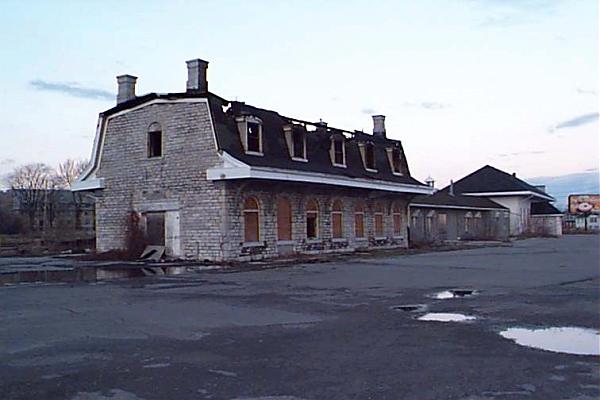
There was nothing particularly appealing about Kingston, Ontario, when I first started writing my novel, The Great Dagmaru. At the time, I was traveling there weekly to attend doctor’s appointments at either Kingston General or Hotel Dieu Hospital. Two things inspired me to set my story there: one, I was familiar with the geography of the city, and two, this place:

28_big

Kingston’s Grand Trunk Railway Station – source – Wikimapia.org

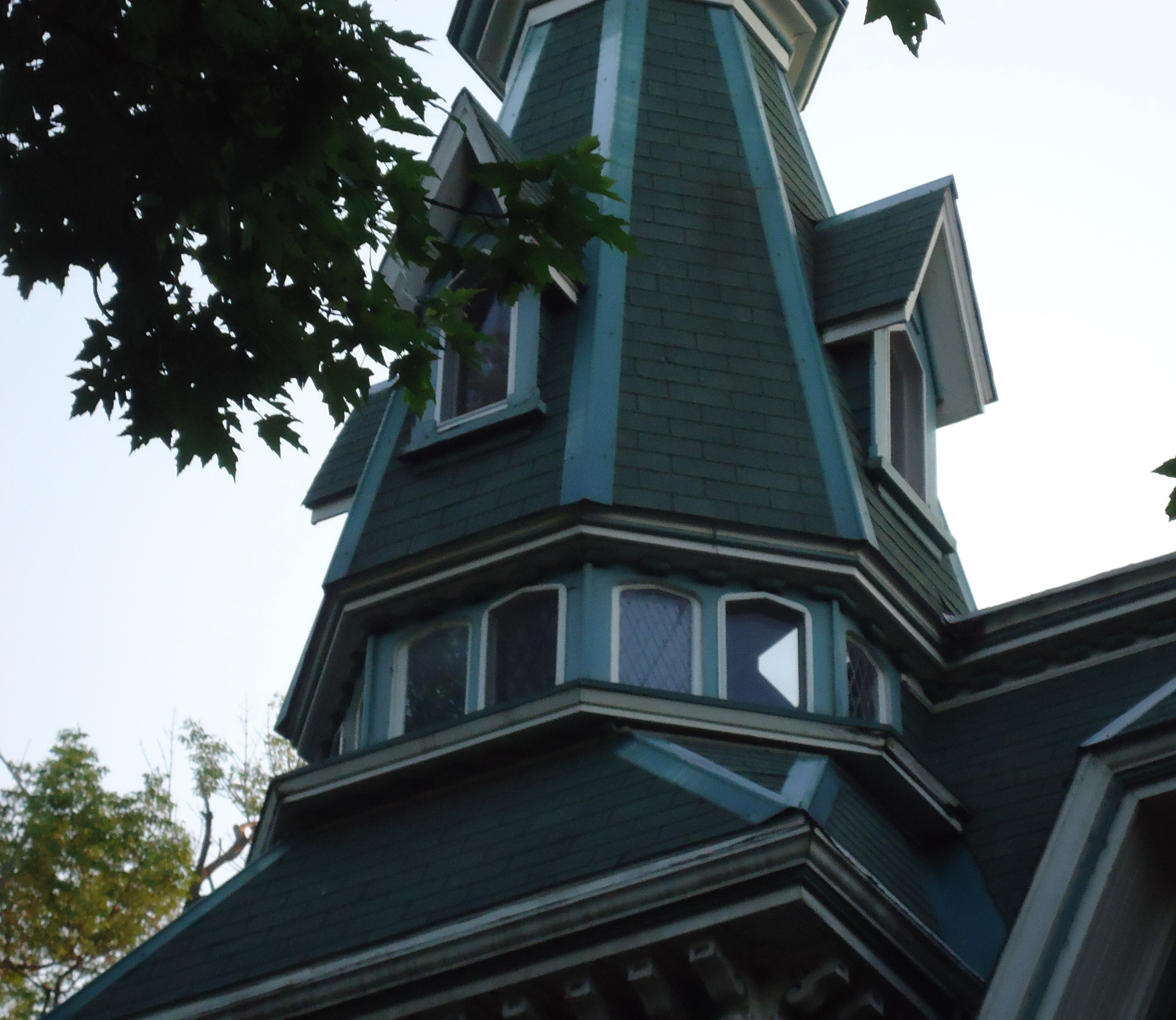
I started writing my novel about a teenaged girl named Herman, who runs away from home and meets a tall dark stranger on a train. She never makes it where she is going. My initial idea for the tale included the stranger taking her to this train station – hollowed out as it is by a devastating fire – and keeping her there to serve him and his wicked magic. However, as I wrote, the character of the tall dark stranger morphed into Stephen Dagmar, a rich, gorgeous, and talented magician with a dark secret, who lives in a grand Victorian house with a turret:

turret

Hochelaga Inn, Kingston, Ontario

which I wrote about in this post back in July: https://lindaghill.wordpress.com/2013/07/19/a-haunted-visitation/

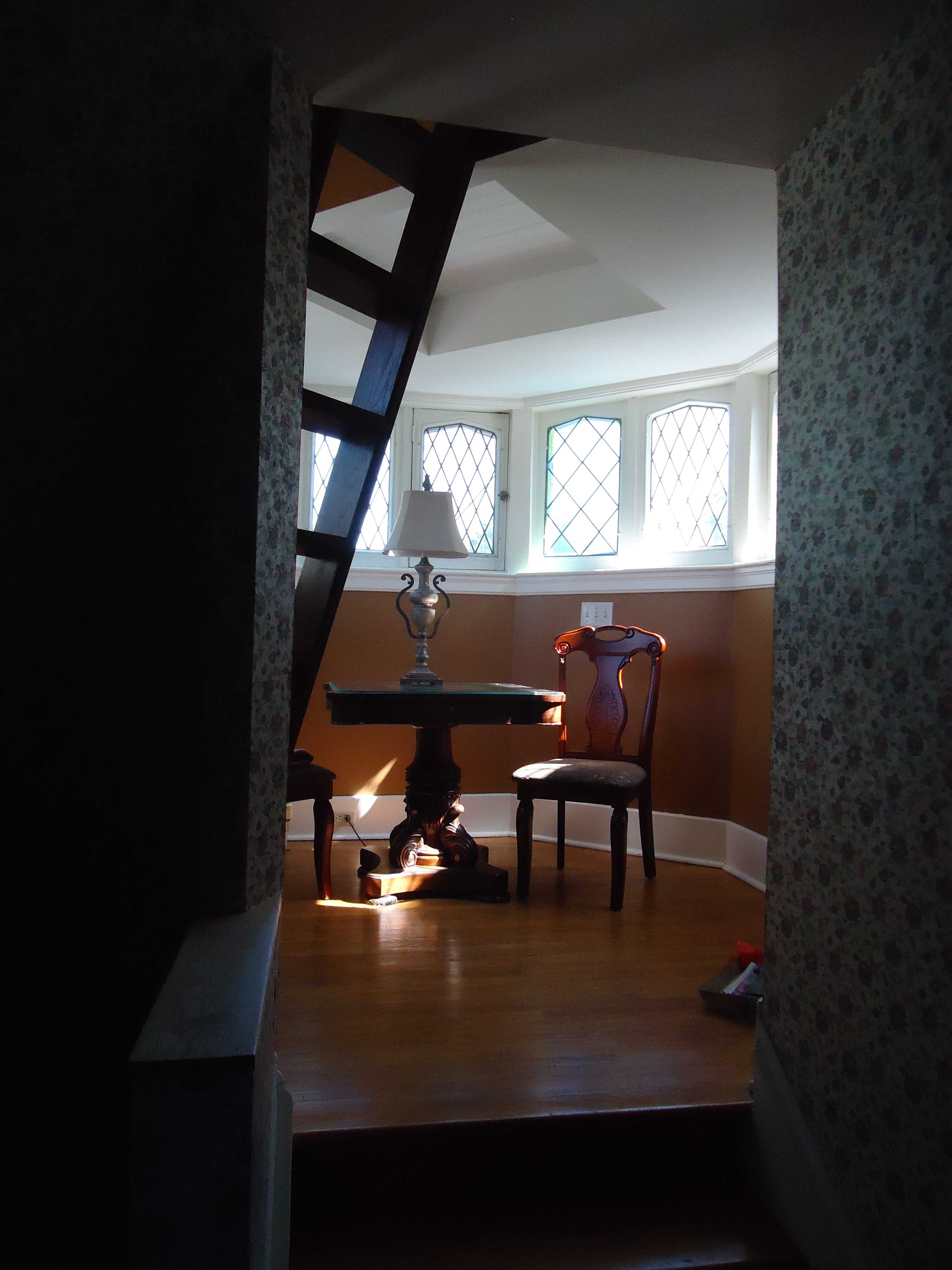
I was lucky to be able to stay in the house I had envisioned my character living in, and as you’ll see if you read my July account, I even had the thrill of being allowed to sleep two nights in the turret room.

As I said at the beginning of this post, Kingston had no real attraction for me until my characters were born. Gradually as I traveled there for appointments I found myself enthralled with the city.  I could see the places I imagined my characters would visit, and the things they would see with their own eyes. Eventually, the place began to inspire me, like a painting of a narrow pathway curving through a lush forest.

My story had a world.

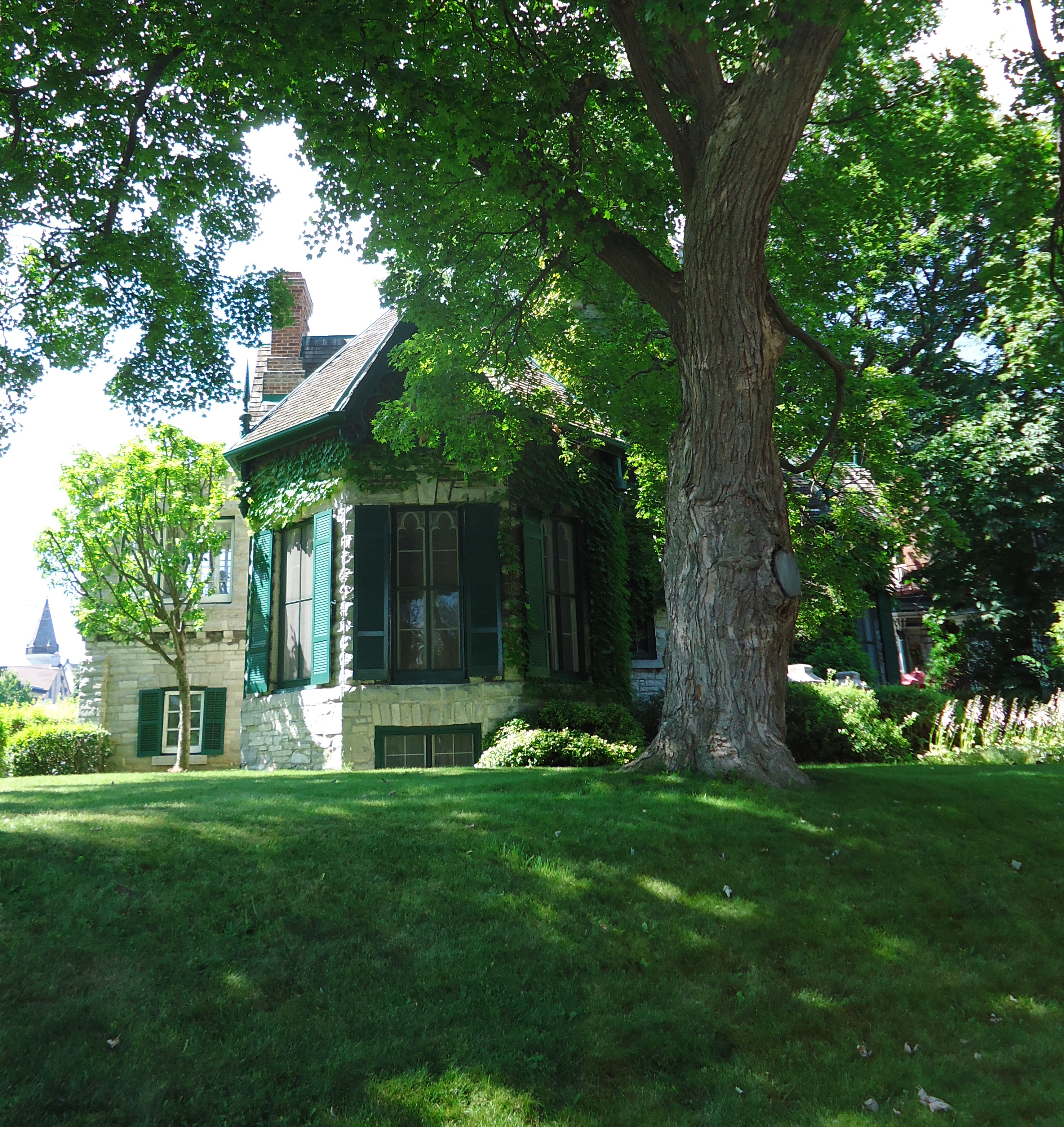
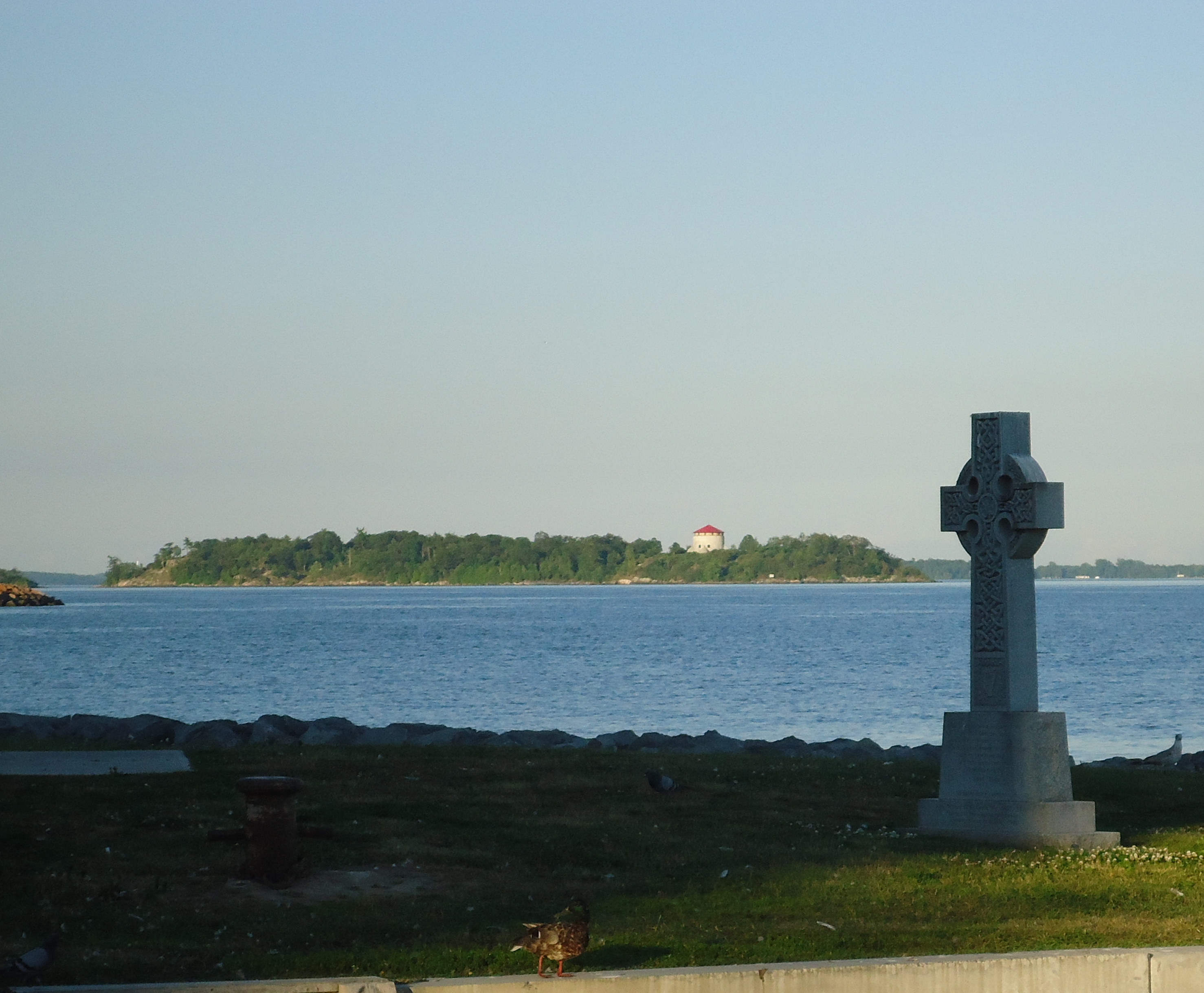
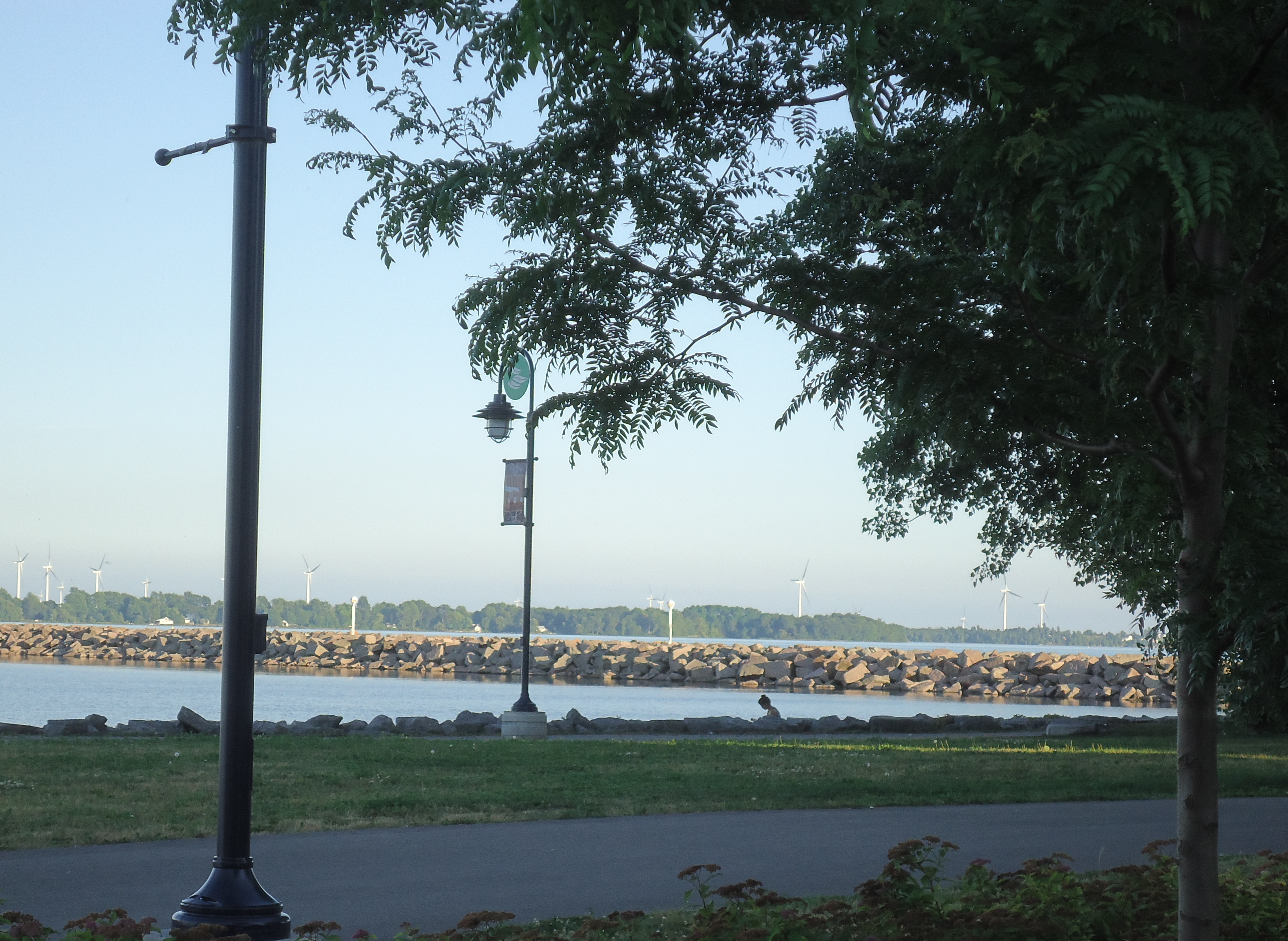
Here are some pictures I took while I was there: here is the world where Stephen and Herman exist.

Next door to the Hochelaga Inn

Next door to the Hochelaga Inn

Cross, Lake Ontario

Cross, Lake Ontario

girl reading

Girl, reading by the water

Kingston Harbour

Kingston Harbour

DSC00334

Inside the turret, Hochelaga Inn, Kingston

I have been back to Kingston since this trip to do further research. I found the spot where Stephen’s house will be situated in the story (I expropriated land from the government which currently houses the local airport – I doubt they’ll notice) and I have measured distances from there to various places my characters will visit. I’ve sat in restaurants, sipping wine with the ghosts of Stephen’s and Herman’s characters, and I’ve strolled with them along the shoreline.

One of the first things I ever read about writing fiction was that it is necessary to create a world in which your characters will live.  I consider myself lucky to have found this amazing, inspirational setting for mine.


26 Comments

Write What You Know

Write what you know; write what you know; yes, yes, okay we get it already. But have you ever wanted to write who you know? Fictionally that is.

When I write, I write characters. Plots in my stories, are secondary. I take, for instance, a scenario, ask ‘what if?’ and off I go. Once I have a character in place, they decide what happens in the circumstance I put them in.

I know a few people very well. Family, friends – I can’t help but know them. The people I don’t know very well, I study. I watch the way their expressions change when they talk about certain topics that they love or which scare them… you get the picture, right?

But there’s that saying again. That rule. Write what you know.

Now say, for instance, I was to write about someone I adore. They probably wouldn’t mind. They’d be able to hold my bestseller up high and say, ‘This is about me!’ and they’d be proud to do it. But what if I wrote about someone who I don’t respect? Or someone whose personality is less than scrupulous? I wouldn’t use their real name, of course. And the story would not be the one they lived in real life. But they’d know. And I’d know that they knew. And then I’d have to wonder; are they planning to do something devious to smite me? After all, they aren’t the most the most pleasant person to deal with in the first place. How far will they go?

Write what you know. I know very little about ‘things,’ but I know a lot about people. About characters and what makes people tick.

Have you ever ‘written’ someone you know, fictionally? How would you feel if someone ‘wrote’ you?

Tick tick tick… boom!


6 Comments

NaNoWriMo Challenge

“Write what you know.” It’s one of those things we’re told to do, along with “show, don’t tell,” and a bunch of other guidelines we’re given as writers, that will apparently give us the tools we need to make us better writers and bring home our first million. It’s the “write what you know” thing I want to focus on today though, and I’ll tell you why.

I almost got hit by a bus today.

Don’t panic, I’m okay, but it was a close call. I’m talking inches. Millimeters even. It got me to thinking about my NaNo project, as does everything in my life – when I decide to write a novel, I live and breathe it, almost literally. Having something as dramatic as a real-life near-death experience happen to me (okay, okay, the mirror of a bus moving half a mile an hour nearly clipped my ear as I walked along the edge of a sidewalk) being worth mentioning, could happen to one of my characters, right? You can bet it will.

So back to writing what you know. I don’t think they really mean it in the strict sense of writing what you do for a living outside of writing, for instance. Or even writing about characters who write, though many writers do (I’m looking at you, Stephen King). If we did that, everything we wrote would be autobiographical. And what would the fantasy writers do? I’m thinking an elf accountant would be rather boring.

I think writing what you know can be taken in a more broad sense of feelings, emotions, and yes, little experiences like almost getting hit by a small, slow-moving school bus that’s coming to a stop beside the curb.

So my challenge, for all my fellow NaNoers who are reading this, is simple. Write into your story the next time you write, about something you’ve experienced in the last week. If your characters are in space it can be a sensation, or a sentence you remember hearing or saying.

And if you’re writing an autobiography – oh what the hell. Lie! I dare you!

P.S. Let me know how it goes!