I wonder, sometimes, at the perfection of nature. How effortlessly it creates and destroys – how without discrimination it can ruin our lives. Yet who of us can say that we belong here?
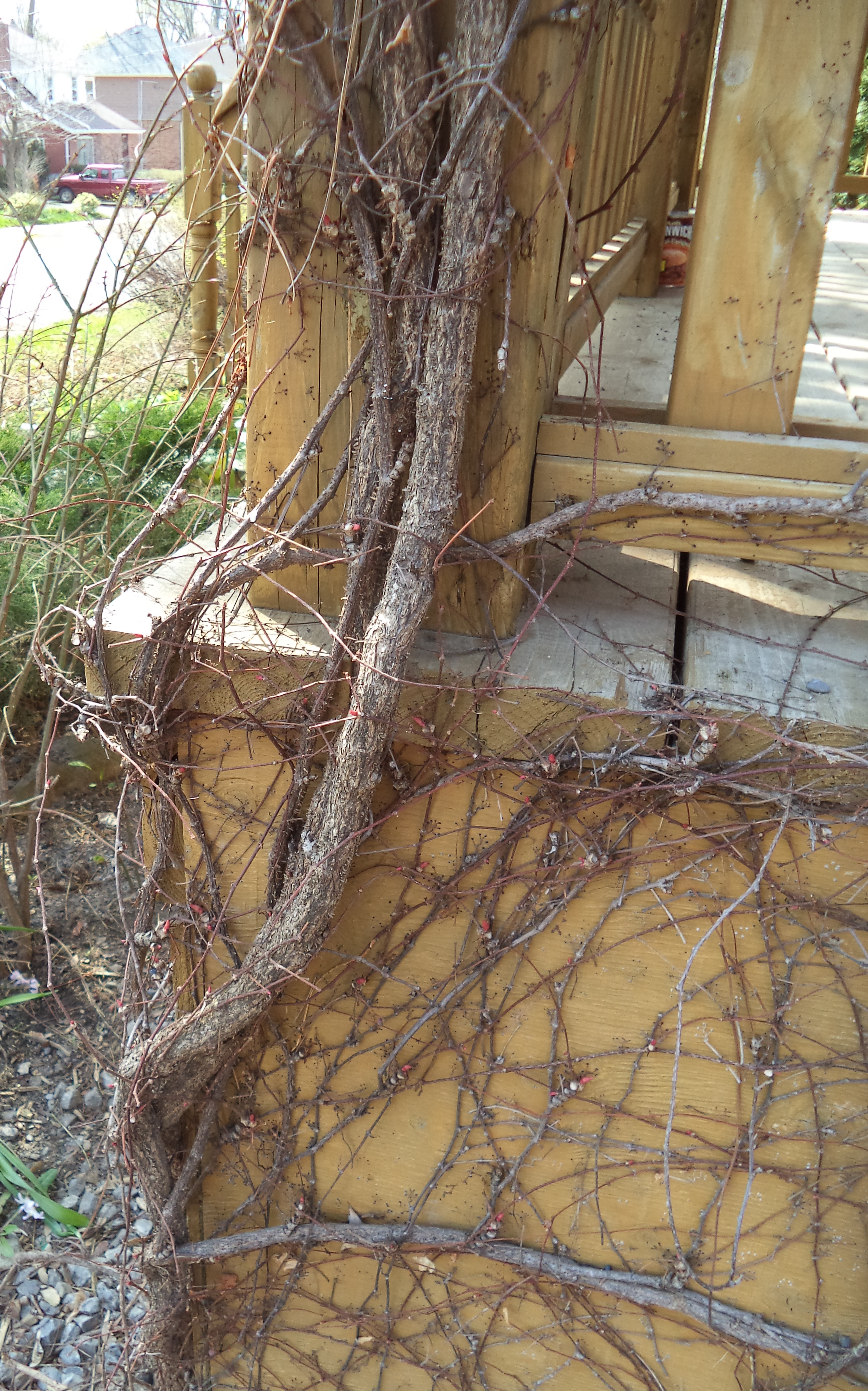
As I walk, I see what nature has made. A flower lives and dies, just like that. We build things and they disintegrate in the elements before our eyes. We are persistent, we humans. Aren’t we? Coming up with better ways to protect our properties, but in the end it’s always nature that takes it from us. Is it any wonder that our own nature is to destroy things?
There is no material we can create that will not be foiled by nature… for if anything lasts beyond our existence on earth, nature will eventually destroy it, even if it takes the complete annihilation of the planet to do so.
What can we create that nature will not destroy? Where does our purity lie?
The answer must be in the things that we, like nature, create without effort. For some of us it’s music, or thoughts or words – ideas. If our nature is to create that which is beautiful, it is also ephemeral, as a flower.
We are born and we die. Like animals we have the innate will to survive; to perpetuate our species. We belong here every bit as much and as little as a flower. We are no better, and no worse. For even a weed can destroy concrete.
I can’t help but believe there is a great lesson to be learned from nature. The more effortlessly we live–the more we do what our true nature compels us to do–the more content we can be.
Stress is something everyone feels, if not on occasion, then constantly. Though we’re all different, and there are certain things or combinations of things in our lives which cause it, it has approximately the same effect on us all.
It raises our blood pressure, causes in us either adrenaline or exhaustion, usually one on the heels of the other. It does wondrous things to our bodies – gives us headaches, makes our skin break out in rashes and can give us pain where we didn’t think it was possible to have it.
But. There’s always a but. Stress is invisible. It can’t be counted; it can only be felt. It can only be seen by the ripping out of one’s hair and the stomping about of one’s feet, or the squealing of one’s wheels on dry pavement. Explaining it is near impossible to someone who doesn’t understand how much we’re under.
There are scales for pain: you can see them hanging on hospital walls. But what if there was such a thing as a stress scale? How would it look?
On a scale from one to ten, for myself, one would show a picture of me banging my shin against the foot of my spare bed, that has been out to get me since I inherited said bed with the house I’m living in.
Three would be the bed plus dropping everything I touch in the space of fifteen minutes. I have days like that.
Five might be getting in the car and turning the key to a click instead of the firing of pistons when I have an appointment to get to.
Seven to eight is being interrupted ten minutes after I sit down to write, and I just have my head in whatever I’m trying to concentrate on… eight being the fifth time in as many minutes.
But ten? Ten is having my son tell me he’s tired and putting my ear to his chest to find that his heart is in arrhythmia, going 90 beats per minute for a few beats, and then down to 30 for a few and back again. Adds up to a decent 60bpm, but there’s still the question, do I take him to the hospital or not? I’m alone with two kids, neither of whom can be left alone. This is where my stress level was two nights ago.
And so I thought, maybe I should make up a scale for my family so they know when not to push my buttons. Because no one wants to get in the line of fire when I’m reaching five, let alone ten.
What do you think – not for me, but for yourself? Might a stress scale lessen the number of stress-induced conflicts in your home? Something to consider, I think.
Are you aware of the Good Samaritan Law? It’s in effect in many parts of the world to protect those who are trying to help someone experiencing life-threatening trauma, such as a heart attack, from being sued should an injury occur. And yet time and time again I’ve seen shows on TV where no one wants to get involved for fear of an unfair lawsuit. See it enough times and it sounds like it must be the truth.
Another classic is the case of the missing person. Here in Canada there is no waiting period, no matter how old the missing person is. As long as there is sufficient belief held by anyone, whether they’re a relative or a co-worker that someone genuinely is off their schedule and can’t be reached, the police will take the matter seriously. From what I’ve been able to find online, many parts of the U.S. have the same policy. That one must wait 24 or 48 hours to report someone missing is a myth. And yet how often do you see it in fiction?
I’m going to keep today’s post short, but I’d like to hear from you. Can you think of any more urban myths? If you can, please share them. Let everyone benefit from your myth busting!
You’re lining up to cash out at the grocery store. There’s a guy in his mid-twenties behind you and a woman in front of you. The woman is arguing with a child who wants a chocolate bar. You think to yourself, just buy it and shut the kid up. The guy behind you says as much under his breath but loud enough for you to hear. Which one of these people do you relate to? If you actually thought, just buy it… then it’s the guy behind you. On the surface you are in cahoots. But if you’re a parent, you probably thought, that poor woman, and chances are you relate to her on a deeper level. Why? Because you probably share experiences.
I’m going to go out on a limb here and say that the things which connect us as human beings are that which we relate to when we read a book. The more we can relate, and get into the mind of the protagonist or even the antagonist, the more we’ll enjoy the novel.
Back to my scenario at the beginning. Assuming you’re a parent, you can probably understand on some level what it’s like to have a child who, at one time or another, acted out. Yes, there are people out there with perfectly behaved children in public. Perhaps they only go out on days that the sun shines. I have no idea. But not to belabor the point, let’s go instead to the guy standing behind you. If you agreed with him then you can relate, but only to a point. His situation and his attitude aren’t as obvious as the harried mother’s. But that doesn’t mean you can’t write a book he’d be interested in reading. It probably wouldn’t have children in it. Then again, the mother’s ideal novel probably wouldn’t either. She’s looking for an escape.
So is the solution to never put kids into your novels? Maybe. Or maybe you just need to think about who is going to relate to your characters–their lives and their emotions–to find your target audience.
The first arguably most difficult thing about creating characters, is avoiding writing about yourself. This argument is based on the fact that you know no one better. Your experiences, tastes, and even your most used expressions are bound to creep in – sometimes you don’t even realize it.
The second arguably most difficult thing about creating characters is making them believable. It’s easy to write a one-dimensional character. So we write back stories, which may or may not show up in the final cut. But how detailed are those back stories? And how rounded do they make your characters?
The difficulty I find in writing a back story is that it tends to be about the big stuff. When I’m writing one, I’m looking for what motivates my characters to do what they do. Because a character with no motivation is the worst kind of cookie-cutter character. So I go back to their childhoods to discover what made them who they are. What are the huge events that shaped them into the person my readers will see when I plop them down in my story and ask them to react?
It’s not just the big things that shape who we are in real life though, is it? It might be where we were when someone else’s big event happened. It might be a piece of music we heard. Any number of trivial things make us who we are. And it’s those little things that make people care about us. Truly care. Which is another MAJOR if not the most MAJOR thing in keeping a reader reading our story.
With this in mind, I came up with an idea. What about those stupid surveys you see all over facebook and the like, which teenagers love to fill out? I looked one up. My mind was blown. This is only one of thousands: https://www.facebook.com/note.php?note_id=50193333157 so if you don’t like the questions here, google “100 question survey facebook.” If I answered only a third of the questions on this survey, from the perspective of my characters when they were teenagers, I would know everything I could possibly want to know in order to create the best characters I can come up with. Because the problem with writing just a back story, is the lack of spontaneously coming up with your characters quirks, opinions, and thoughts. Why? Again, because your own seep in.
As soon as I have the time, I will take this survey for at least four of my novel’s characters–two main, and two supporting. I honestly believe this is the golden key to rounding out their lives, and making my readers–and myself–care about them and what happens to them.
Do it. And really put some thought into it. Remember what it was like to be a teenager, when all of these questions mattered. Then let your character’s experiences seep in to your story and not your own. I can almost guarantee that it will give you a better story.
I sit here writing this in a state of exhaustion. If you’re a parent, I’m sure you’ve been here. Up since 4am with a child who can’t see the merit of sleeping when tired, but can only scream and cry, I’m just about ready to do the same. Most of us go through a stage when this occurs on a daily (or nightly basis) but even when that less-than-delightful slice of life is over, it can come back with a vengeance during the holidays.
But they’re supposed to be fun, aren’t they? Relatives come to visit, or we go to visit them; everyone has an extra day off work or school or daycare; there’s great food to be eaten; there’s excitement in the air because everything is different! So what’s the problem?
First, many kids can’t handle the excitement. The pressure to be good for Santa, or in this weekend’s case, the Easter bunny can be overwhelming. They don’t know what to do with their energy when all the adults are telling them to please be quiet, and at the same time ignoring them because they haven’t seen Aunt Agnes and Uncle Ralph in ages. Between that and the preparations or the traveling, the kids will start to be annoying because it’s their only way to get the attention they want. The result: anxiety all around.
Second, schedules go down the tubes. When everyone is going about their daily routine, whether it be the weekday one or the weekend one, kids know what to expect and when to expect it. The holidays present an exception to just about everything. For a small child, even the fact that he or she isn’t being served spaghetti as usual on a Saturday evening can be a cause for a little extra glee.
How to combat this depends on the child. With my two who weren’t afraid of Santa and the Easter bunny – or even the tooth fairy – schedule was essential. It was all different, yes, but by letting them know what to expect ahead of time, for instance when people would arrive, what we’re having to eat, when we’re leaving and getting home etc., they could at least anticipate how they needed to behave and when. This way I was able to spend time with them when I wasn’t busy, and they knew that then was the time to have my undivided attention. Allowing them to help out with the preparations was always a good way to spend time with them and still get something done, as long as I allowed for the extra time it would take.
Allowing them to have a say in the decision making as well, was a great way to get through the day. It gave them a sense of control, even though the choices I asked them to make were unessential to what I had planned. For instance: we’re leaving at noon – do you want to wear this coat or that one? This is something I’ve carried through to every day life, and I find it amazingly helpful in getting anywhere. Or in the case of preparation, I would ask them where they wanted the decorations placed. Thanking them for their good decisions also aided in making them feel as though they were being well behaved, taking some of the pressure off and with it the anxiety of being good enough to receive their gifts. This is something I personally disagree with, by the way; I won’t deny them the treasures of the holidays. Rather, I will take away the extras they receive during non-holiday events, such as a favourite activity.
So you get through your day and it’s the night before. Excitement is at an all time high at bedtime because a special visitor is coming while they sleep, to leave gifts. You put them to bed praying that they won’t get up and catch you doing the deed. It’s even worse if the anxiety includes fear of the “beloved” character who is shoved down their throats sometimes month in advance of this one highly stressful night. What happens then? Right. I’ve been awake since 4am.
And so we go back to Alex’s fear of the dreaded bunny etc., and that’s the one I haven’t figured out what to do with. Alex’s anxiety isn’t, I’m sure, unique to only him. It keeps him awake at night, which is something even we adults can relate to.
I’d love to hear any suggestions you have in the comments. For the rest, I hope you can take something from this: I hope it helps.
Do you ever wonder how much you’re giving away of yourself when you write? Details of a writer’s psyche must show through, since all we really have to draw from are our experiences and our emotions. Our backgrounds: our genetics, our nature and how we were nurtured as children make up who we are, and are inherent in everything we do. Whether a writer of fiction, personal accounts, poetry… what creates our literary “voices” is our individuality.
I worry–not as much now as I used to–how much personal information I’m putting out there, whether intentionally or not. I worry that my kids will read what I write and be embarrassed or scarred – who wants to read their mother’s love scenes after all? How do they know how much of it comes from my imagination and how much from experience? I certainly won’t hand my own mother my novel and say, here, enjoy it. But then she judges me more harshly than anyone on the planet.
Of course, not everything we write comes from experience. I often say that if Stephen King did, he’d long be imprisoned. It’s not as though he goes around killing people, or feels the pain of being hit by a car. … oh wait, never mind. I watched a Youtube video the other day, in which he spoke to a room full of students about his process in writing, among other things. He said that one of the questions he is asked most often is what his childhood was like – what kind of trauma he went through in order to write the things he does. He said there was absolutely nothing… but if there was, he wouldn’t tell.
For myself, I went through an obsession with death after my father passed away suddenly. Not surprising since I was only fourteen years old. Is it why I write horror on occasion? I’m not sure. It was certainly the only traumatic thing I went through as a child. Yet paternal abandonment, in whatever form, shows up in every major work I’ve written to date. It took four novels before I realised it.
This is what I am open about. What about the stuff I’d rather not be? I ask again: do you ever wonder how much of yourself you’re giving away when you write? Is there anyone in your life you’d rather never read your work – or are you careful just in case they do?
This is Linda, coming to you today from a moment in time where all I want to do is rest. That’s life. And that’s what this blog, and the theme of this challenge is all about here on “Life In Progress” – life and how writing fits naturally into it. So that’s the “life” part of today’s topic. Now for the writing part.
The experts suggest that when an author writes a novel, he or she should let it rest. Depending on who the expert is will depend on the time frame of the resting period, but most say at least a month. Why is this a good idea?
We get attached to our words. We read them after they are first written wearing rose-coloured glasses, and it’s not until we’ve stopped reading them for a while and then go back to them that we realise how dirty those glasses were. I wrote my first novel, Trixie in a Box, during 2004’s NaNoWriMo. The manuscript has been sitting under my bed, communing with dust bunnies ever since. I took it out last year, thinking it might be a good idea to polish it and e-publish it ahead of my epic The Great Dagmaru, on which I’m currently working. However, three paragraphs into Trixie I was struck hard by how awful it is and it quickly rejoined the dust bunnies. I still believe in the story, but the prose is of fanfic quality – which makes sense since that’s what I was writing a lot of at the time.
Nine years is a long time to allow a manuscript to sit; I’m not recommending it. But to let your work sit for, say, as long as it takes to successfully complete a grammar course isn’t a bad idea. Failing that, the simple practice of daily writing can help significantly, as can reading the works of a good author. I can’t emphasize enough that it must be a GOOD author – someone you aspire to be just like. I tend to pick up the habits and to an extent, the style, of whomever I am reading, whether it’s E.L. James or Stephen King, the former of which is a scarier prospect than the latter.
I know how tempting it is when a story is finished to just publish it – I do it here on WordPress all the time. But for something I want to be remembered for, I’m going to take all the time it needs (not I need) to get it right.
I don’t know why I didn’t think of this before! Here I’ve had this amazing, fantastic way of studying the human condition for years without realizing it.
I’m always going on about body language and facial expressions, and the importance of them in writing not only to fill out a story with what is believable, but in finding characters in the first place. It’s by observing people that we get our ideas, and if we can read people’s body language, we can often see what they’re thinking. Scenarios abound!
There’s a good reason that this is one of my Deaf son, Alex’s favourite shows on TV. People in it are genuine and there is no speaking. The language is universal. What is it?
Just for Laughs Gags.
Here you can find any range of spontaneous emotion: surprise, outrage, confusion, bewilderment, joy, disappointment, fear… the list is almost endless, and every single bit of it is spontaneous.
For example, a young guy in a car pulls up to a stop sign and a pretty girl crossing the street waves to him. She proceeds to write her phone number on his windshield with a lipstick and does the international sign for “Call me!” While he’s still sitting there, a guy comes up to the car and squeegees the number off. The guy in the car has gone from happy and flirtatious to panicked in a matter of seconds.
Or in this, a young boy lays down a “hole” on the sidewalk and a man falls into it. The looks on the observers’ faces are priceless.
You can find hundreds of them online at Just for Laughs Gags own Youtube channel. They are each under two minutes long and not only can you watch them with the sound off, I recommend it.
This is truly a wonderful resource for anyone studying body language and many of them are hilarious; even if you’re not looking to observe human behaviour, watch them just for laughs!
I encourage everyone to go to Youtube and watch a few. Share the titles of your favourites in the comments. I’d love to see what you think!


 lindaghill.com