Life in progress


21 Comments

E is for … Experience

They say, ‘write what you know,’ but does that mean if you’re not an astronaut, you can’t write about astronauts? Okay, maybe it helps, but that’s what research is for. Personally, I take the rule of, ‘write what you know’ a little more loosely than that.

Take, for instance, yesterday’s post where I used the example, ‘The steamy kitchen reeked like a wet cat,’ when showing what better detail looked like. Had anyone asked me what a wet cat smells like, I would have had to tell them that I honestly have no idea. I’ve never owned a cat, let alone a wet one. In other words, I think it’s the details where our experience really comes in handy.

Having said that, not all things can really be described. 99.9% of us have had at least a sip of water, but can you describe the taste? And take, for instance, what it’s like to urinate. We’ve all (100% of us this time I think) done it, but if I’m writing from the point of view of a male, I’m unable to accurately describe the action of doing so standing up. Does that mean I shouldn’t write from the male perspective? Again, research comes in handy. I can ask other people (preferably male ones) to tell me what it’s like, but I still won’t have had the experience. And so I’ll probably never write a story in which my male character is dealing with bladder issues. Either that or, like the wet cat, I’ll get good at faking it.

My novel takes place in a real city: Kingston, Ontario, Canada. I don’t live there, but I’ve been there many times, and thought I knew the place well enough to be able to set a story there. Said story written, I decided to take the time to vacation there for a few days by myself, to really do some research, and I was amazed at what I gleaned. Because my characters get off the train there at the beginning of the novel, the station was one of my obvious places to visit. I sat to wait for the westbound train and whist there, noted the colours of the waiting room seats, the landscape outside – even the way the doors worked. When the train stopped I watched to see which track it was on, so I knew my characters would disembark on the nearside of the station rather than having to take the underground passage to get across. All of this will come to perhaps a sentence or two in the novel, but I believe it will add to the feel, as well as have the people who live in Kingston nodding in agreement when they read my book. I could never have accomplished this from information I took from Wikipedia; I had to experience it for myself.

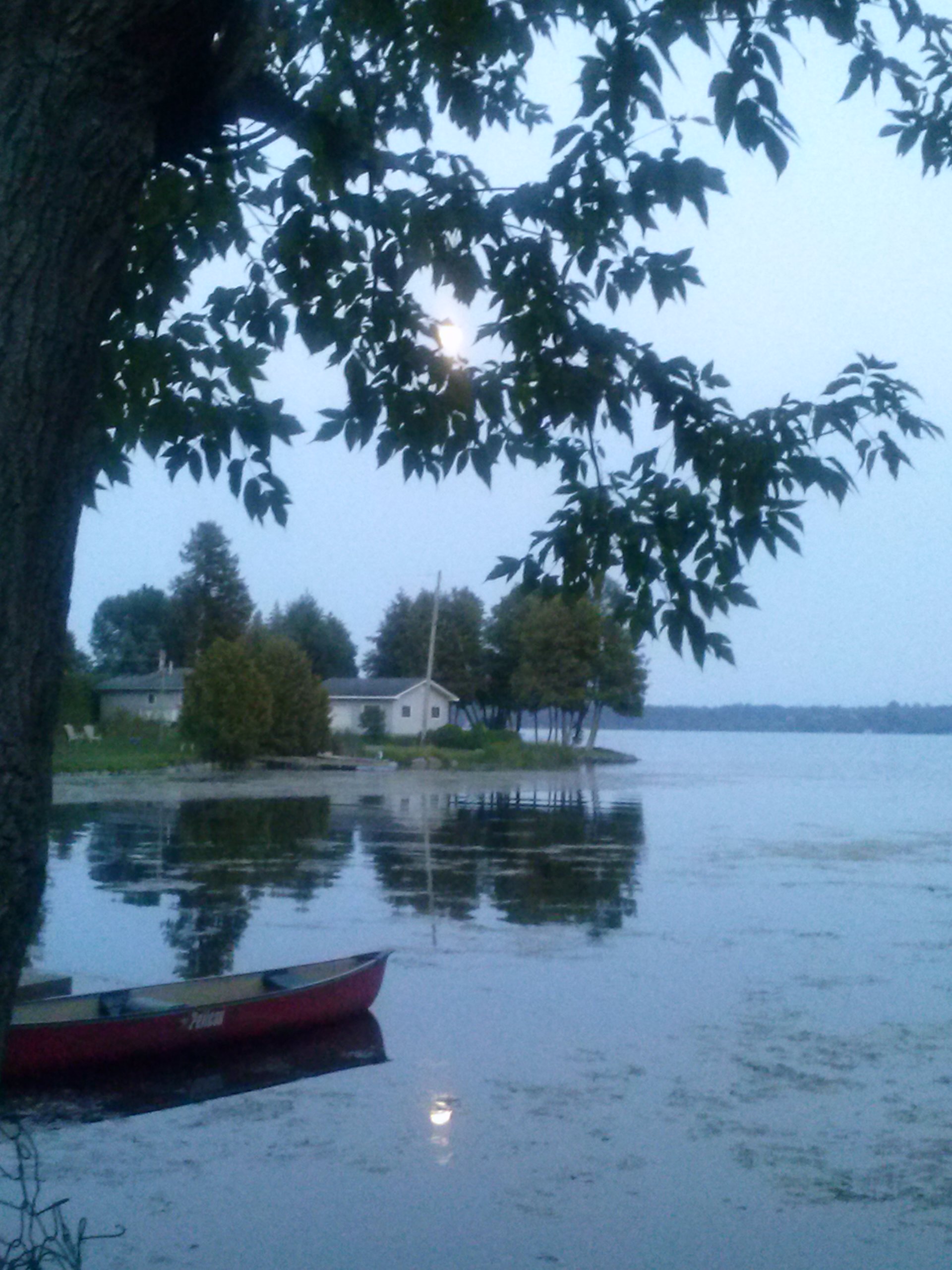
Other life experiences from my past also often manage to creep into my stories. What comes through most vividly for my characters to experience are the wonders of nature I have had the gift of being part of.  There’s nothing quite like the quiet of a country field on a snowy night, or the singing of cicadas on a sweltering summer afternoon. These are the things that make fiction come to life. Real life.

Can you tell when something is contrived in a story?


For today’s A-Z Fiction, please click here: http://lindaghillfiction.wordpress.com/2014/04/05/e-is-for-elementary-dear-jupiter/

18 Comments

The Friday Reminder and Prompt for SoCS April 5/14

It’s Friday again, and time for the Stream of Consciousness Saturday prompt. Stream of Consciousness writing is a great way to open up your mind and allow your thoughts to gently land upon the page. Ask yourself the question, “What is something I care about? If I was sitting with a friend over coffee or tea, what would I like to talk about?” Then write a sentence and let the rest flow. You’ll be amazed at what comes out! The prompt can help get you started.

This week, the prompt is ‘do’ or ‘don’t.’ Write about any subject at all, but make it about something you feel strongly about doing or avoiding; whether it’s yourself or others, it doesn’t matter.

After you’ve written your Saturday post tomorrow, please link it here at the prompt page in the comments so others can find it and see your awesome Stream of Consciousness post!

Here are the rules:

1. Your post must be stream of consciousness writing, meaning no editing, (typos can be fixed) and minimal planning on what you’re going to write.

2. Your post can be as long or as short as you want it to be. One sentence – one thousand words. Fact, fiction, poetry – it doesn’t matter. Just let the words carry you along until you’re ready to stop.

3. There will be a prompt every week. I will post the prompt here on my blog on Friday, along with a reminder for you to join in. The prompt will be one random thing, but it will not be a subject. For instance, I will not say “Write about dogs”; the prompt will be more like, “Make your first sentence a question,” or “Begin with the word ‘The’.”

4. Ping back! It’s important, so that I and other people will come and read your post! The way to ping back, is to just copy and paste the URL of my post somewhere on your post. Then your URL will show up in my comments, for everyone to see. For example, in your post you can copy and past the following: “This post is part of SoCS: (https://lindaghill.wordpress.com/2014/03/01/socs-stream-of-consiousness-saturday-the-rules/)” Also, you can come here and link your post in the comments. The most recent comments will be found at the top.

5. Read at least one other person’s blog who has linked back their post. Even better, read everyone’s! If you’re the first person to link back, you can check back later, or go to the previous week, by following my category, “Stream of Consciousness Saturday,” which you’ll find right below the “Like” button on my post.

6. Copy and paste the rules (if you’d like to) in your post. The more people who join in, the more new bloggers you’ll meet and the bigger your community will get!

7. Have fun!


37 Comments

D is for … Detail

I’ve bemoaned, before, the difficulty I’m having in trying to cut down the length of my manuscript whilst keeping the important little details intact – and at the same time making it readable.  In a much broader sense than the idiom perhaps implies, the devil is in the details.

From http://www.usingenglish.com/reference/idioms/devil+is+in+the+detail.html – “When people say that the devil in the detail, they mean that small things in plans and schemes that are often overlooked can cause serious problems later on.”

After letting my ex read the beginning of my novel a couple of weeks ago, I know now that my problems are indeed serious. When we were together he was not only my sounding board, he was the one I wrote to impress, and impress him I did with the details I put into my stories. He told me that they were what drew him in, placed him in the story so that he could feel as though it was going on around him. Two weeks ago, however, the first criticism he gave me was, “Where’s the detail?” I knew I was screwed.

While you might want to scream at me, “He’s your ex, Linda! Of course he’s going to criticize!”, I know he wants me to succeed – and I’m sure it has absolutely NOTHING to do with the fact that if I make millions off this book he won’t have to pay child support. Heh.

So what is detail, and how am I to know the extent to which I should go to add it? I personally don’t like to read a book where every nook and cranny is described; every piece of clothing, or each hair that is blown out of place. I think the most important details are the ones that stimulate the senses.  They say the sense of smell brings the most vivid memories to mind, yet ironically it’s the one I most often forget, and have to insert into a scene after it’s written.

For me, the most efficient way to add detail is to eliminate the passive voice. Just one example and I’ll leave it there – the rest I’ll save for my fiction post.

It was hot and smelly in the kitchen.

vs

The steamy kitchen reeked of wet cat. What were they cooking?

The detail adds to the word count. And yet which would you rather spend time reading?

We’ve discussed it here in the past and the general consensus seemed to be that most people would rather read a longer well-written book than a shorter one that sucked. I agree. It’s why I read Stephen King.

What I’d love to know today is, what kinds of detail do you enjoy? Do you want to know what every character looks like or would you rather use your own imagination? Do you want to know what they’re wearing down to the designer, or is a pair of starched jeans enough to tell you that they go to way too much trouble with their laundry?


After you’ve commented, please visit my fiction blog for today’s A-Z installment, to see what I’ve done to demonstrate today’s topic! Find it here: http://lindaghillfiction.wordpress.com/2014/04/04/d-is-for-devil-in-the-details/

Thanks!


41 Comments

C is for … Critique

There’s nothing like a good critique of your work, is there? But how do you go about getting it?

Long, long ago–maybe about two years (I have a short attention span)–I was afraid to share my words with the world. I was scared that someone would steal my stories, and so I was hesitant to allow anyone to read them. When I did finally break down to hand my manuscripts to people to read, I limited the exposure to friends and family. The drawback is that typically all I received in feedback was, “That was nice!” or “I liked it!” which is great, except it doesn’t help. I wanted to know what was wrong with it. I know now that my first manuscript sucks as far as style and grammar go, but still, the only feedback I’ve ever received is positive.

The solution must be to give my manuscripts to people who will dissect them.  Pull them apart, tear the words to shreds and hand them back to me in a green garbage bag to put back together. Still, for fear of seeming mean, unless I’m paying someone to do it, it’s difficult to find somebody with that sort of gumption.  But I’m guilty of the same thing! I fully acknowledge that critiquing is a difficult task. Telling someone what they’ve spent the last year bleeding from the soul on needs a complete overhaul is painful for everyone. And believe me, I’ve wanted to tell authors that their hard work sucks dusty ping-pong balls, yet I either found it difficult or avoided it altogether.

Is it better to leave the job to a professional? Or do you ask those who have an emotional attachment to the task? Personally, I say pay for that whipping, baby! It’ll probably make you a better writer.


 For the short fiction that goes with this post, please visit my fiction blog here: C is for … Can’t Get No Satisfaction.


55 Comments

B is for … Blogging and the Writer

It’s the on-again, off-again, great blogging debate: why do writers have blogs? In my own experience, my reasoning has evolved, and in a very satisfying way.

At the same time I discovered WordPress, I was told that if I wanted to write and get my name ‘out there,’ I should start a blog. The scariest part was deciding to use my real name; then came deciding what to actually write about. While that particular choice hasn’t evolved much, what I have found as the biggest surprise, is the community here. I got my name out all right – but I hardly have publishers knocking on my door.

There are many different reasons for a writer to blog. My personal favourites are; to build an audience for that eventual bestseller; to keep in the practice of writing, especially while editing; and the best one of all: to have easy access and a (good) excuse to procrastinate, rather than edit the above-mentioned eventual bestseller.

I suppose if I do ever get off my butt and start sending out queries to magazines and the like, I may be able to use this blog as a sample of my work. We all have to start somewhere, and it’s really the age-old question – what do you put on a resume when you have no previous experience? Well, here’s my experience right here. But again, am I just using the blog to procrastinate?

One way or another, the very best part of this whole blogging experience is the wonderful people here on WordPress. Even if I never make it to the bestseller lists, I will always have this great community of people who are as dedicated to writing (and art and photography) as I am.  If I’ve gained anything, it’s the valuable insight and fantastic friendships – and I’m meeting more people every day. What could be better?

It would be interesting to know if your reasons for blogging are the same now as they were when you started.  Are you as surprised as I am at the support you’ve gained here? I know without it, I may just have fizzled out by now – both as a blogger and as a novelist with an erstwhile eventual bestseller.

For the short fiction that goes with this post, please visit my fiction blog here: B is for … Bob the Blogger.


8 Comments

The Simplest Things

DSC00084

click on the photo to see the detail

It’s funny how the simplest, and sometimes the ugliest, things can be made beautiful by nature.

The frost along the edge of these dried leaves captured my attention this morning while I was outside with Alex, waiting for the school bus.

Speaking of Alex and going to school, I thought he would be staying at home today. Yesterday he came home with a little itch on his wrist. No biggie. I couldn’t see anything, and he seemed to forget about it as he got involved in things to do. Then before bed it began to itch again. I encouraged him to ignore it and just go to sleep but he wouldn’t stop scratching. He was miserable.

After listening to him whine in bed for about half an hour, I went back upstairs to see him. He was covered, head to toe, in a red, angry-looking rash. There were bumps and actual weals on his legs, some of which were five inches across. It was horrible! I gave him an anti-histamine and let him sleep on the couch where it was a little cooler.

This morning, when he woke up, he’d forgotten about it. All that was left of the rash was the scratches he inflicted on himself with his fingernails.

The cause, as well as I can theorize, was stress caused by the simple little itch he had on his wrist – which was also gone this morning.

Funny how the simplest things can take on a life of their own, when given a touch of something extra, isn’t it?


41 Comments

A is for … About

“I’m writing a novel,” I say, with trepidation.

“Really?” they reply. “What’s it about?”

“Well, it’s about a girl who leaves home and meets a magician.”

“Oh. That sounds … nice.”

“But his family has this deep dark secret.”

(Best case scenario.) Their eyebrows lift a notch. “That sounds intriguing!”

(What usually happens because I lost them after the word ‘magician.’) “What? I was paying attention to something else.”

Explaining what your story is about can be the most difficult thing. From what I’ve discovered by experience, it’s even harder than writing a blurb – because at least with a blurb, if someone is going to bother reading it, they’ve probably committed themselves mentally to paying attention to at least two sentences – one more than you’ve got to grab them with in conversation.

Trying to explain what I do, off the top of my head, is never easy. I don’t have a natural gift for talking about myself. That’s why I write. And so I’m thinking that this may be one of the major reasons that it’s not a good idea to talk about being an author at all.

Before I do, however, publish my novel, I’ll be sure to write myself a sentence which I will recite verbatim whenever anyone asks.

For the short fiction that goes with this post, please visit my fiction blog here: A is for … Aarin, the Topless Pirate.


37 Comments

Gearing Up For A Challenge

Ah, I do love a good challenge. It’s just as well, when you think of it: my entire life is one big challenge. I remember saying to myself, before my son Alex was born, I’m in such a rut. I need some excitement in my life! Now THAT was a lesson in being careful what you wish for, right there. Between surgeries, deafness, feeding issues, pneumonias and meanwhile trying to run a business, the first eight months of his life were anything but boring. But I digress. For what I have coming up in the month of April is nothing, by comparison.

Yes, the A-Z Challenge. Since I’m going to write about writing, I thought why not extend the challenge and write a fiction piece a day to illustrate the article I post here? It’s only twice the amount of work, after all! And besides, there’s no reason I shouldn’t show rather than just tell…right?

We’ll see how far I get.

For now, I’m attempting to put all my accumulated notes in alphabetical order. It only seems to make sense, and why put it off? I’ll have enough to do, starting tomorrow.

Don’t you love a challenge? How will you be challenging yourself in the upcoming month?


14 Comments

Power Over a Dream

I have a recurring dream of being stuck in an elevator. Over the years, I’ve connected it to being stuck in a rut, being undecided about something, or being worried about which direction my life is going. You see, the elevator doesn’t just stop – it takes over. It has a life of its own, going up, down and sideways. Sometimes it is much smaller than the shaft and it swings on its cables. Sometimes it stops between floors and the doors open – revealing to me the scariest thing of all: the dark, dirty elevator shaft.

I had the dream again last night, but this time it was a little different. The elevator continued to have control, but I overcame the dream.

I was in a three storey building and I got into the elevator with two men. I wanted to go from the third to the second floor, but for some reason I couldn’t push the button, so the elevator went to the first floor. The men got out, and I pushed the second floor button, but I ended up again on the third. I allowed the door to close, vowing that if I missed the second floor again, I’d get out on the first and take the stairs. Of course, when the doors closed, the elevator took control. We went up to the roof and started going sideways. I had a window in the elevator then (why? It was a dream) and I could see the tops of the other rooves from where I was.

Instead of panicking, however, as I usually do in this dream, I pulled a piece of paper and a pen out of my bag and I sat down and started writing. I figured if the elevator wasn’t going to do what I wanted it to, I’d make the best of it with the time I had on my hands.

Pretty cool, eh? If only I could remember what I wrote. It might just have been brilliant.


26 Comments

Nothing

There are days when I wish I could just let everything go; empty my mind of all worries, thoughts, desires, and fantasies. Being empty allows me to fill myself up with whatever I want. A clean slate to write on. I wish to be a blank page.

I want to be clean. To stand in a rain storm and scrape away my cares. To unearth my stress and toss it over my shoulder–discarded–not to be seen again.

I want to drive fast down a highway with the windows open, looking forward to the horizon with no destination.

I want to sink to the bottom of the pool, unbreathing, weightless, peaceful.

I want to meditate. To drift off into the ether; to become one with the universe, and there, commune with spirits of those unliving. To join in their stories.

I want nothingness. With nothing inside me, I can fill myself with what I need.
CAM00049